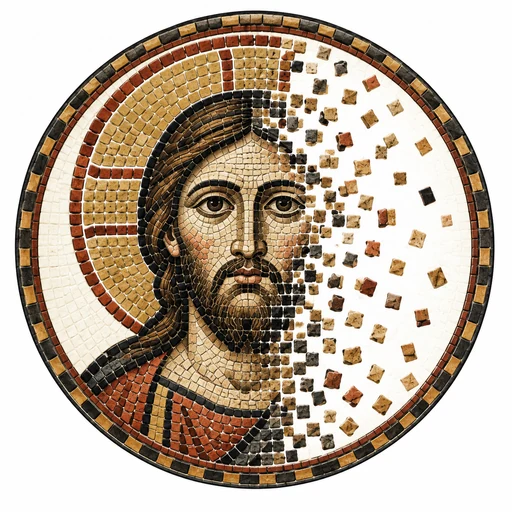
The Gospel narratives do not identify their authors or state when they were composed. Marcion’s Gospel is the first Gospel in this chronology, dated to 144 CE from later Christian accounts. No document written in 144 CE records it. The familiar author biographies appear in later Christian testimony.
Anonymous texts and later attributions
None of the four Gospel narratives identifies its author by name or states a composition date. Luke's preface says the writer consulted earlier accounts and addresses Theophilus; it does not name the writer or identify the eyewitnesses behind those accounts.
Irenaeus, writing in the late second century, assigns the four works to Matthew, Mark, Luke, and John and links Mark to Peter and Luke to Paul. Those are later attribution claims, not statements made by the Gospel narrators. Eusebius later preserves material he attributes to Papias about Mark and Matthew; Papias' work is not available as a complete independent text. The chain of attribution must be evaluated as transmission, not treated as a first-person author signature.
Acts 4:13 calls Peter and John ‘uneducated and ordinary.’ It does not specifically say that they were illiterate, and it is a line in Acts' own narrative, not a separate literacy record. It does not identify who wrote any Gospel.
Four books, not four independent witnesses
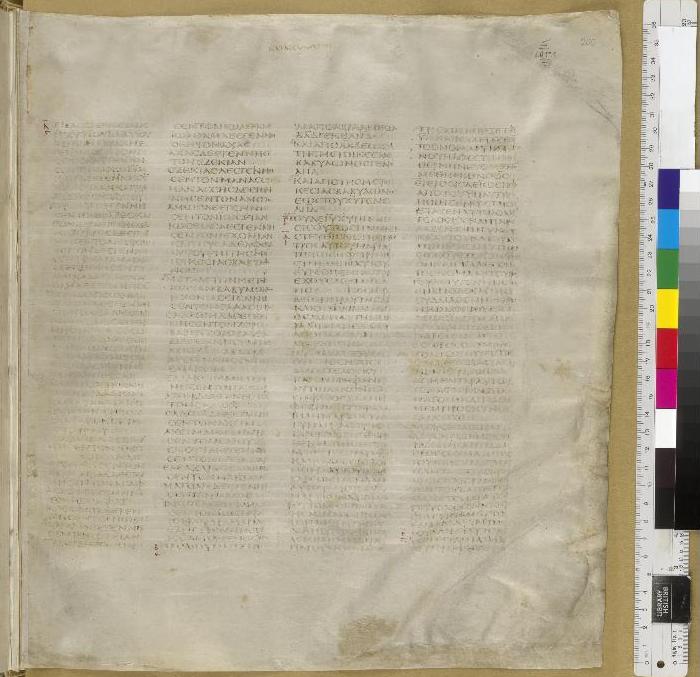
Matthew, Mark, and Luke share episodes, sequences, and often close wording. For example, the three accounts of the paralytic (Mark 2:1–12; Matthew 9:1–8; Luke 5:17–26) follow the same basic sequence. Their similarities make literary dependence part of the evidence; they cannot simply be counted as three independent memories of one event.
Markan priority—the proposal that Mark was used by Matthew and Luke—is an explanation for much of this overlap, not an author statement. Other source models exist, but none turns the parallel passages into independent contemporary attestations. John has a distinct structure and different chronology, but a fourth narrative is not automatically an external witness merely because it differs.
Marcion and the first documentary horizon
Marcion’s Gospel is the first Gospel in this chronology, dated to 144 CE from later Christian accounts. No document written in 144 CE records it; the date is reconstructed from later testimony. Justin Martyr names Marcion as an active teacher without identifying a Gospel collection; later writers, including Irenaeus and Tertullian, describe a Gospel associated with Marcion and its relation to Luke. Their polemics are later reports about the texts, not copies produced by Marcion.
Christ Before Jesus argues that Marcion's Evangelion preceded canonical Luke and that Luke adapted it. One textual clue is Luke 4:23: Jesus refers to signs already done in Capernaum before the narrative says he arrives there in 4:31. The sequence can be read as a seam left by rearranging an earlier story. This is a literary reconstruction, not a fact printed in a manuscript label.
No Marcionite copy of the Evangelion is available for direct comparison with Luke. Its wording and order are reconstructed from quotations, paraphrases, and descriptions by later opponents. The proposed priority of the Evangelion is a testable explanation of those passages and reports; later polemical accounts do not independently date each Gospel composition. The book also proposes that Luke’s addressee Theophilus was Theophilus of Antioch, using that identification to place Luke–Acts in the later second century. Luke supplies the name but no office or detail that identifies him as the Antiochene bishop. The book reports stylometric similarity between most of Luke and its reconstructed Evangelion; similarity within a selected corpus does not by itself supply a calendar date.
Scripture supplies narrative material
Matthew explicitly builds scenes around Israel's scriptures. Matthew 2:15 applies Hosea 11:1—‘Out of Egypt I have called my son’—to Jesus, although Hosea's verse recounts Israel's past exodus. Matthew 2:6 reshapes Micah's Bethlehem oracle around a ruler who will shepherd Israel. These are visible interpretive choices by the Gospel writer; they are not independent reports that the described events occurred.
Matthew 2:23 says that the move to Nazareth fulfilled what ‘the prophets’ said about a Nazarene, but it does not quote a single identifiable verse in the Hebrew Bible with that wording. The claim is an interpretation within Matthew's story. In the passion narratives, Mark and Matthew place the opening of Psalm 22 on Jesus' lips and reuse other scriptural images. Psalm 22:16 has a significant translation and textual-history dispute; the case should not rest on the oversimplified claim that one English rendering settles it.
The Synoptic accounts describe darkness from about the sixth to the ninth hour, around noon to mid-afternoon; John does not use this sign. A solar eclipse requires a new moon, while Passover falls at the full moon. The detail therefore cannot be explained as a solar eclipse on the narrated Passover date. It works as a literary portent in the passion story, not as an astronomical timestamp.
Origen's On First Principles 4.1.15 says that some scriptural passages cannot be understood as literal events and must be read spiritually. This is evidence that an early Christian writer could interpret biblical narrative figuratively; it is not a witness statement about the Gospel events.
The birth stories cannot be combined into one chronology
Matthew places Jesus' birth during the reign of Herod and narrates a visit by the Magi, a flight to Egypt, and a later move to Nazareth. Luke ties the birth to the census associated with Quirinius, then narrates a visit to the Jerusalem Temple and a return to Nazareth. The two books give different routes and episodes; Luke does not include Matthew's flight to Egypt. Matthew alone narrates Herod's killing of children in Bethlehem; Josephus' account of Herod in Antiquities 17 does not mention it.
Herod's death is conventionally dated to 4 BCE, while the census associated with Quirinius is dated to 6 CE. The narrative anchors are about a decade apart. Harmonizing them requires a chronology not supplied by either account.
Matthew traces Joseph's genealogy through Solomon and Jeconiah; Jeremiah 22:30 says that Jeconiah's descendants will not prosper on David's throne. Luke gives a different line through Nathan. Both genealogies name Joseph, and neither text says that one is Mary's. Both birth narratives also say Joseph did not father Jesus, so neither genealogy supplies a consistent biological descent for Jesus from David.
John the Baptist is not a family record for Jesus
Josephus describes John the Baptist as a preacher who baptized and drew followers. That is a report about John in Josephus; it does not identify Jesus or confirm a relationship between them.
Luke alone calls John and Jesus relatives, describing their mothers as kin. No independent source supplies that genealogy. John's role in the Gospel plots—predecessor, baptizer, and witness—remains a claim inside those narratives, not independent confirmation of Jesus' biography.
The passion and tomb narratives conflict
The Synoptic Gospels present the final meal as a Passover meal and place the crucifixion on the following day. John places the trial and execution before the Passover meal, on the day of preparation. Mark says Jesus was crucified at the third hour; John places Pilate's judgment at about the sixth hour. These accounts do not give one shared sequence of the final day.
The accounts also differ over who carries the cross, whether both condemned men mock Jesus, and Jesus' final words. The Synoptics have Simon of Cyrene carry the cross; John says Jesus carries it. Matthew and Mark depict both men crucified beside Jesus as mocking him; Luke gives one a change of heart. Mark and Matthew quote the cry of abandonment, Luke gives a different final saying, and John gives another.
The tomb scenes give different groups of women, messengers, and discovery sequences. Matthew adds an earthquake, a descending angel, and guards. Mark has a young man inside the tomb; Luke describes two men; John first follows Mary Magdalene alone and later describes two angels. These are variant literary scenes, not four matching deposition records.
Matthew says Judas hanged himself after returning the money; Acts describes him acquiring a field and dying in a fall. Acts is a separate narrative, but this is another conflict within the later Christian story-world. John 20:24 calls Thomas “one of the Twelve,” and the letter attributed to Paul uses the same group label in an appearance list; the label is not a roster identifying who was present. The Passover prisoner release also appears only inside the Gospel narratives; no independent source cited here documents that custom.
Single-source details and scenes without named witnesses
John alone narrates the spear wound. Matthew alone adds the tomb guards and earthquake. Mark preserves an Aramaic cry and has bystanders mistake it for a call to Elijah. Each is a detail in one literary account; none has an independent parallel that verifies the event.
The narrators also disclose private scenes without naming a source who could have heard them: the wilderness temptation, Jesus' conversation with Nicodemus, the Samaritan woman's private exchange, and conversations in Pilate's hearing. The text supplies no witness chain for those scenes. Omniscient narration is a feature of storytelling, not evidence that an unnamed eyewitness supplied the dialogue.
The Gospel trial scenes portray Pilate yielding to a crowd. The Pilate inscription confirms the prefect's office but says nothing about Jesus or the trial. Josephus' accounts of Pilate's other actions provide context for his governorship, not an independent record of this episode.
Manuscripts show the text changed
The longer ending of Mark (16:9–20), the story of the accused woman in John (7:53–8:11), and the expanded wording in 1 John 5:7–8 are absent from important early Greek witnesses. Matthew 17:21 and 18:11 also appear in later copies but not in the earliest witnesses to those verses. These readings entered the transmission of the New Testament and are marked in modern critical editions.
The longer ending of Mark is not a fourth-century invention: Irenaeus quotes Mark 16:19 in Against Heresies 3.10.5. At the same time, it is absent from Codices Vaticanus and Sinaiticus, and Eusebius discusses copies of Mark ending at 16:8. Both facts matter: the passage circulated by the late second century, while major manuscript witnesses preserve a shorter ending. The exact path of the endings is a textual question, not proof of a first-century composition date.
A manuscript copy establishes that a reading existed by the time that copy was made. It does not establish when the Gospel was first composed, who composed it, or that the narrated events happened.
Other gospels show a changing story
Christian communities also circulated sayings collections, passion narratives, revelations, and childhood stories outside the later four-book canon. The Gospel of Thomas is a sayings collection, the Gospel of Peter retells the passion, the Gospel of Judas is a revelatory dialogue, and the Infancy Gospel of Thomas gives Jesus a childhood. That infancy text depicts him animating clay birds, cursing children, and healing Joseph's son James. These are literary portraits, not independent records of his life.
Eusebius' fourth-century catalogue distinguishes accepted, disputed, and rejected works and mentions Gospels of Peter, Thomas, and Matthias. His labels show later church authorities drawing boundaries; they do not establish that one set of books had been universally accepted from the beginning. The site's separate Gospel-diversity page surveys these works and the competition over canon.
Joseph of Arimathea and the Josephus parallel
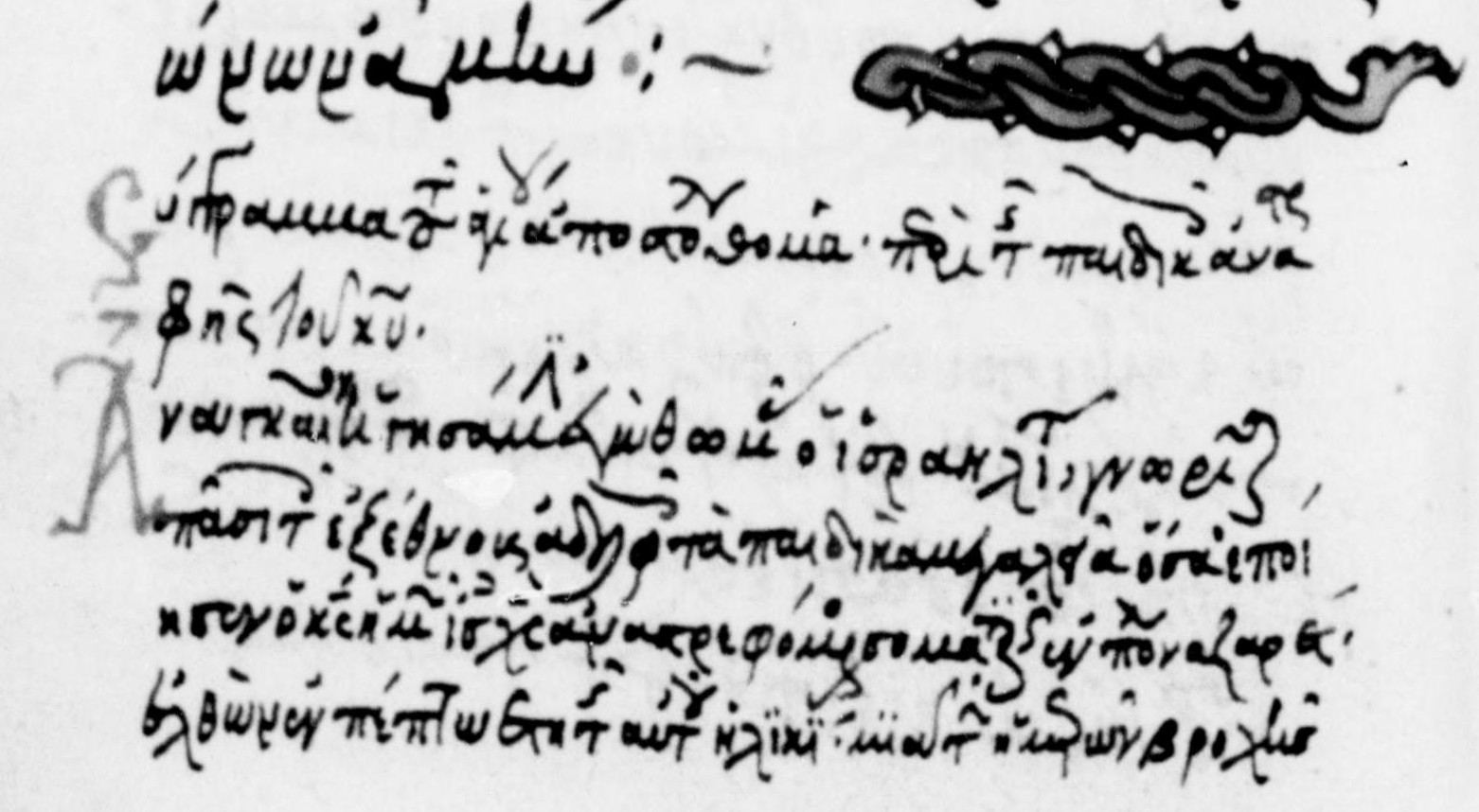
The Gospels introduce Joseph of Arimathea as a council member who asks Pilate for Jesus' body. They provide no independent identification of this person or secure location for Arimathea. His role appears inside the burial narrative, not in an external execution record.
In Life 420–421, Josephus recounts seeing three acquaintances among men crucified during the siege of Jerusalem and asking Titus to take them down; one survived. Christ Before Jesus compares that episode with the Gospel burial request and explores the names Joseph of Arimathea and Joseph bar Matthias. It is a proposed literary parallel, not an identification established by Josephus. Josephus does not name Jesus in that passage.
External notices do not make the Gospels contemporary records
No Roman arrest or execution record for Jesus is known. The Gospel narratives cite no administrative document or named contemporary source for the trial and execution. The Pilate inscription names the prefect, not Jesus or a trial.
Josephus, Tacitus, and Suetonius are later writers; the site's separate pages examine their wording and transmission. The Pilate-cycle texts are later Christian compositions, not Roman administrative files. None turns the Gospels into contemporary accounts or supplies an independent first-century witness statement.
Chronology check
Evidence by date
| Date or period | Source | What it says or does | What it cannot establish |
|---|---|---|---|
| The Gospel texts | Matthew, Mark, Luke, and John | Four narrative forms of Jesus' life, teaching, death, and resurrection. | The narratives do not name their authors or state composition dates; internal claims are not separate external attestations. |
| Marcion-era horizon · c. 144 CE in this site's chronology | Justin; later reports by Irenaeus and Tertullian | Marcion is named by Justin; later writers describe his Gospel and its relation to Luke. | The date is reconstructed from later testimony. No Gospel manuscript or report written in 144 supplies it. |
| Late second century | Irenaeus, Against Heresies 3.1.1 | Names Matthew, Mark, Luke, and John and assigns each an authorial history. | This is a later attribution claim; it does not identify the narrators from within the Gospel texts. |
| Fourth century | Eusebius, Church History 3.25 and 3.39 | Preserves claims attributed to Papias and describes disputes over Gospel and other Christian writings. | Papias' full work is not available for direct comparison; Eusebius is the extant witness to these reports. |
| Broad palaeographic range | Papyrus 52 | A small manuscript fragment containing part of John's Gospel. | Its handwriting does not fix an exact year or establish a composition date before the Marcion-era horizon. |
The case
The Gospels are anonymous literary narratives, not four contemporary depositions. Their shared passages, scriptural construction, incompatible chronologies, single-source details, and developing manuscript forms do not establish independent eyewitness biographies. This site's chronology places the Gospel record in the second century; its specific reconstruction of Marcion's Evangelion as a source for canonical Luke is an argument from textual order and later reports, not a text preserved in a Marcionite manuscript.
Conclusion
The Gospels document later Christian narratives about Jesus. They do not identify their authors, provide four independent contemporary biographies, or date their own composition. First-century dates assigned to the canonical Gospels are reconstructions. Marcion’s Gospel is the first Gospel in this chronology, dated to 144 CE from later Christian accounts; no document written in 144 CE records it.